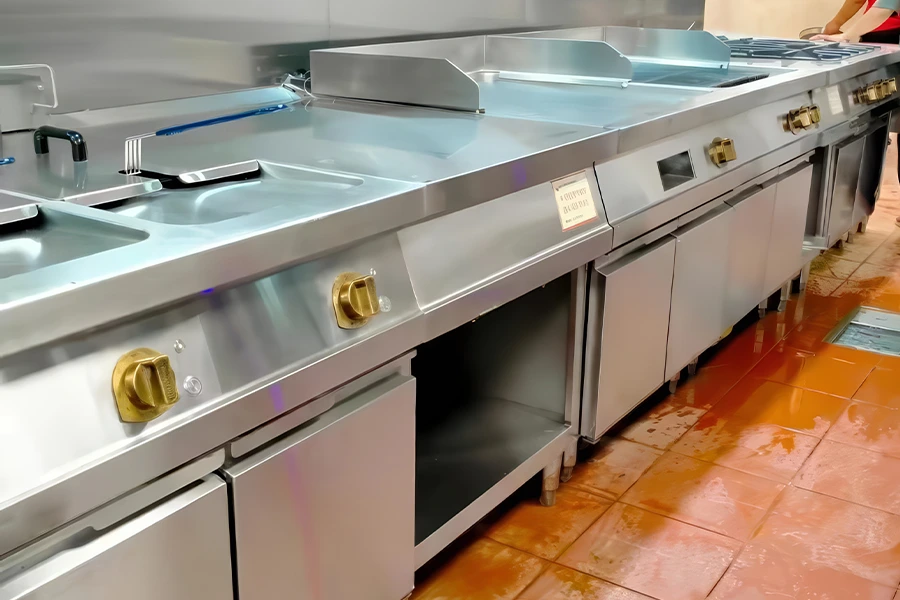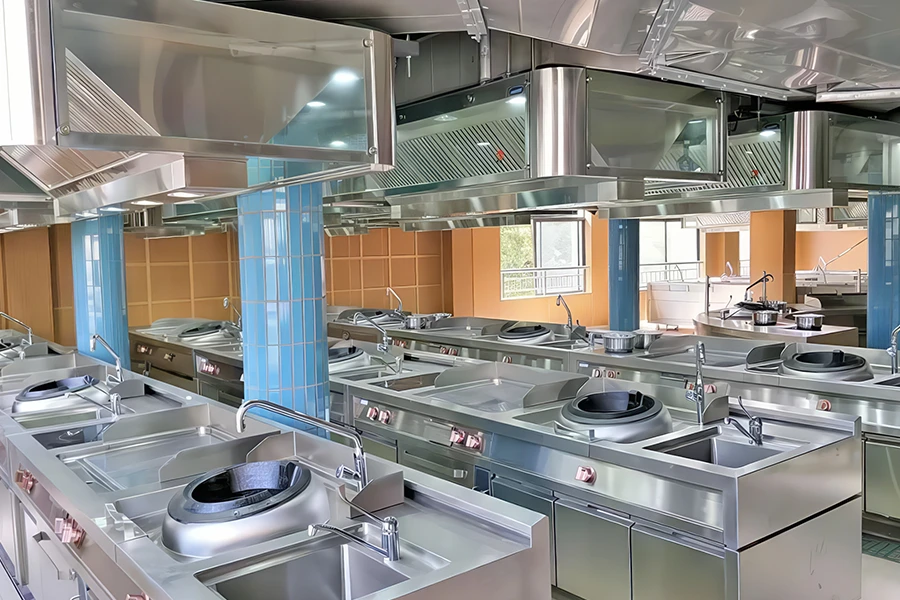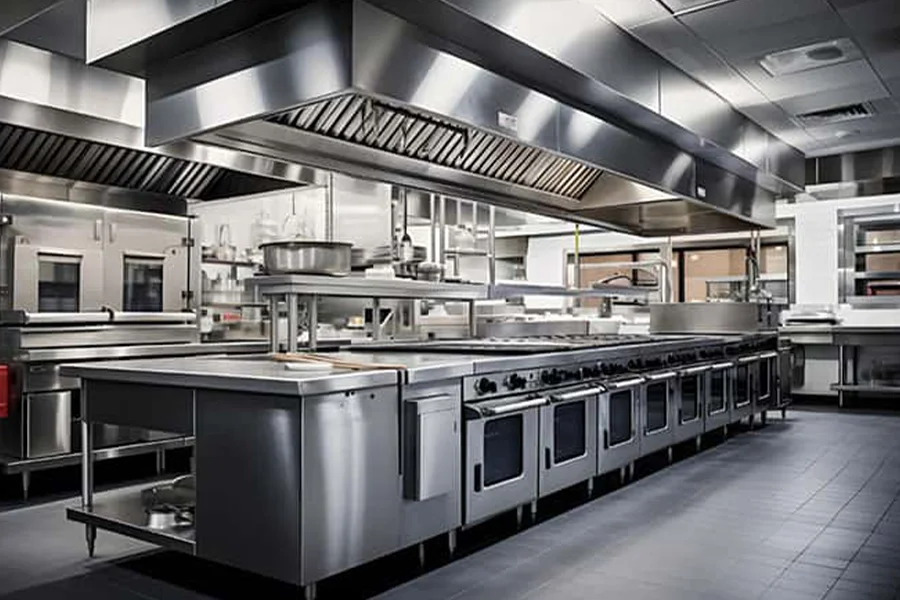
Commercial induction modular cooking systems are rapidly becoming the preferred choice for restaurants, hotels, catering facilities, and cloud kitchens. Compared with traditional gas equipment, induction cooking offers higher energy efficiency, faster heat response, improved kitchen safety, and lower operating costs.
For foodservice businesses facing rising labor expenses, energy costs, and stricter sustainability requirements, modular induction cooking provides a practical long-term solution for modern commercial kitchens.
What Is Commercial Induction Modular Cooking?
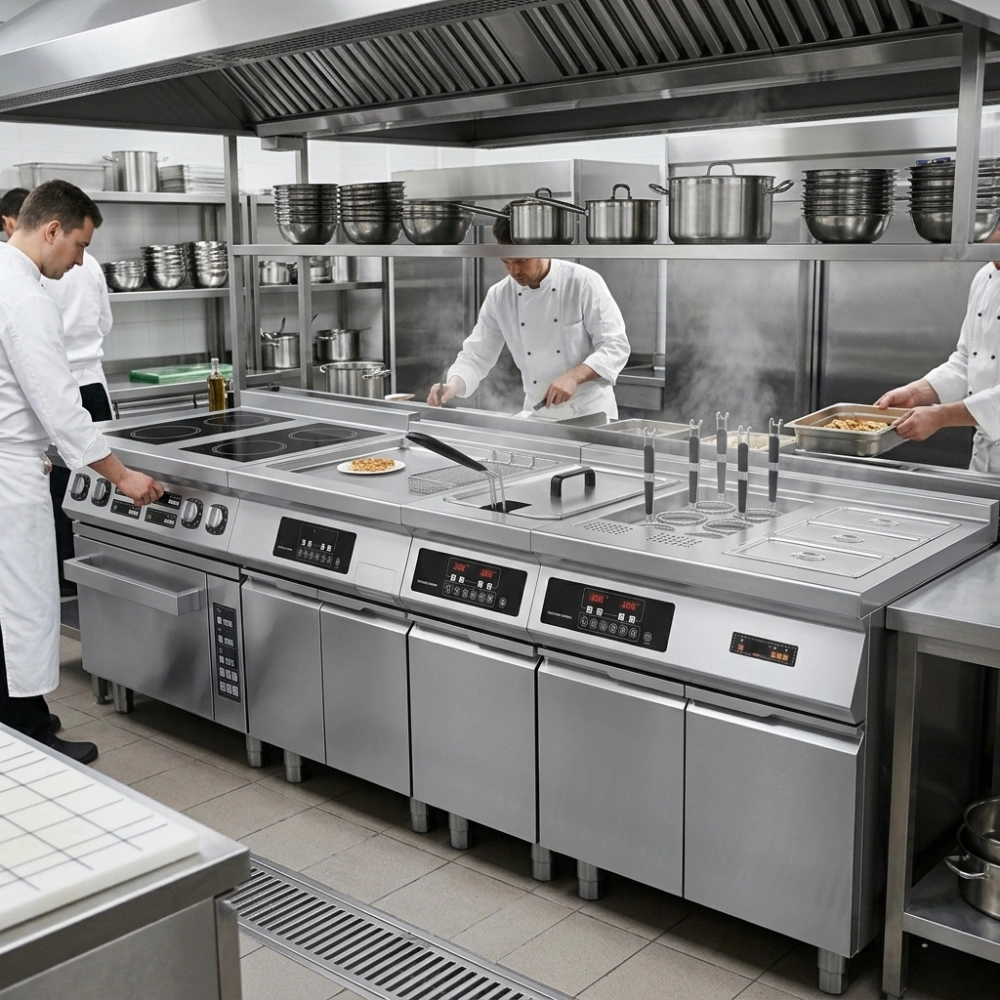
Commercial induction modular cooking is a professional kitchen system that combines multiple induction-based cooking modules into a customizable stainless-steel cooking line. These modular units are designed for restaurants, hotels, institutional kitchens, and large-scale foodservice operations.
Typical modules include:
- Induction cooktops
- Induction wok ranges
- Fryers
- Pasta cookers
- Griddles
- Warming stations
- Stock pot units
Unlike gas ranges, induction systems heat cookware directly through electromagnetic energy, reducing wasted heat and improving cooking precision.
Why Commercial Kitchens Are Switching to Induction Cooking Systems
Restaurants and hospitality businesses are increasingly replacing gas equipment with commercial induction systems because of several operational advantages.
Higher Energy Efficiency
Induction cooking transfers energy directly into the cookware instead of heating the surrounding air.
Faster Cooking Performance
Induction systems respond instantly to temperature adjustments, helping chefs maintain consistent cooking results during busy service periods.
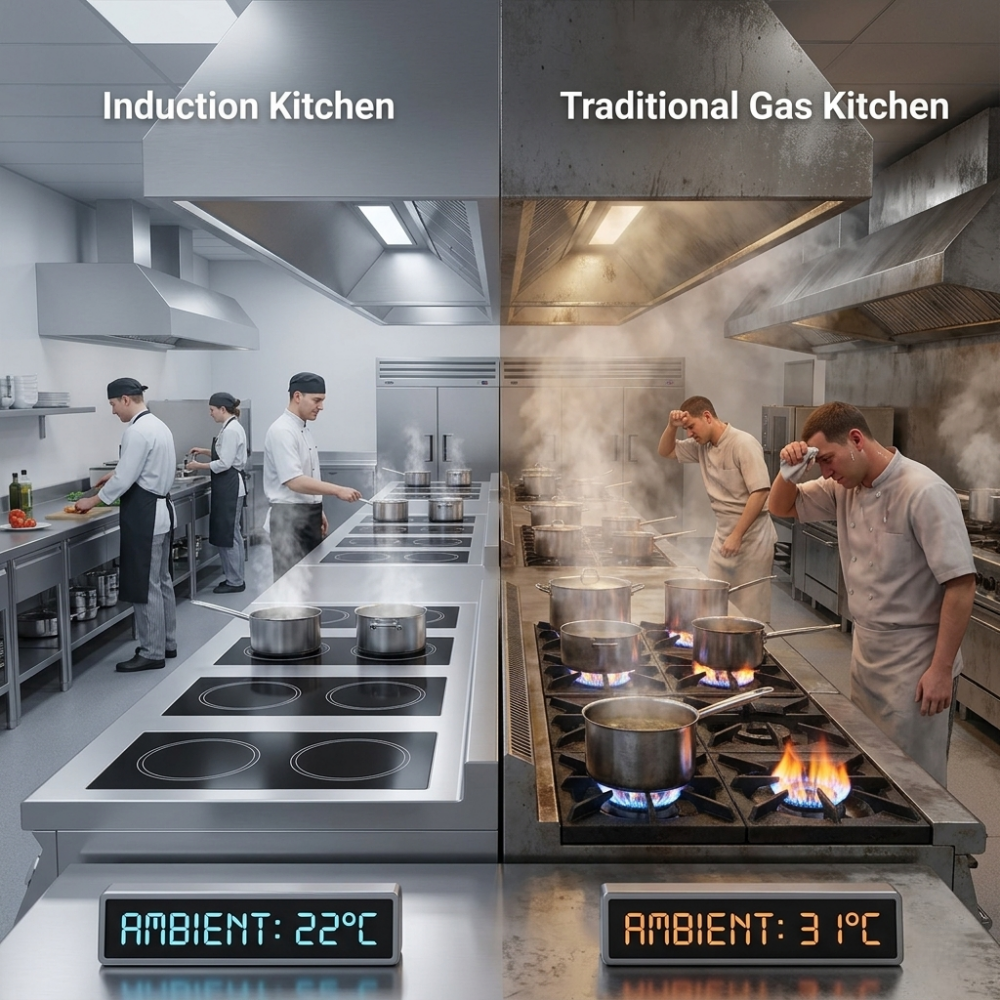
Lower Kitchen Heat
Commercial kitchens using induction equipment typically experience cooler working environments because less heat escapes into the air.
Improved Safety
Because there is no open flame, induction cooking reduces fire risks and helps create safer kitchen operations.
Induction Modular Cooking vs Gas Cooking
Choosing between induction and gas cooking equipment is one of the biggest decisions in commercial kitchen design.
Performance Comparison
| Feature | Induction Cooking | Gas Cooking |
|---|---|---|
| Energy Efficiency | 85%–95% | 40%–55% |
| Heat Loss | Very Low | High |
| Cooking Speed | Faster | Moderate |
| Temperature Precision | Excellent | Moderate |
| Kitchen Temperature | Cooler | Hotter |
| Cleaning | Easier | More Difficult |
| Fire Risk | Lower | Higher |
| Ventilation Requirement | Reduced | Higher |
| Sustainability | Excellent | Moderate |
For high-volume commercial kitchens, induction systems often reduce overall operating costs over time.
Key Benefits of Modular Induction Cooking Systems
Flexible Kitchen Design
Modular cooking systems allow operators to customize kitchen layouts based on menu type, production volume, and available space.
This flexibility is especially valuable for:
- Hotels
- Open kitchens
- Institutional catering
- Cloud kitchens
- High-volume restaurants
Easier Cleaning and Maintenance
Induction cooking surfaces are smooth and easier to clean compared with traditional gas burners.
Benefits include:
- Reduced grease buildup
- Faster daily cleaning
- Lower maintenance requirements
- Improved kitchen hygiene
Better Workflow Efficiency
Modular induction cooking lines help kitchens organize cooking stations more efficiently.
Common advantages include:
- Faster food preparation
- Improved staff movement
- Better space utilization
- More organized production lines
How to Choose the Right Induction Modular Cooking System
Before investing in commercial induction equipment, kitchen operators should evaluate several important factors.
Kitchen Size and Layout
Choose modular configurations that optimize available workspace and workflow efficiency.
Power Requirements
Commercial induction systems require adequate electrical capacity and professional installation.
Menu Requirements
Different food operations require different cooking modules. For example:
| Kitchen Type | Recommended Modules |
|---|---|
| Asian Cuisine | Induction wok range |
| Hotel Kitchen | Pasta cooker + stock pot |
| Fast Casual | Fryers + griddles |
| Catering | Multi-zone induction cooktops |
Ventilation Design
Although induction cooking produces less heat than gas equipment, commercial ventilation systems are still necessary for steam and grease extraction.
Why Induction Cooking Supports Sustainable Kitchens?
Sustainability has become a major priority in commercial kitchen design.
Induction modular cooking systems support environmentally responsible operations by:
- Reducing energy waste
- Lowering carbon emissions
- Improving indoor air quality
- Reducing kitchen cooling demand
Many hospitality groups are now adopting induction technology as part of long-term energy-saving strategies.
Frequently Asked Questions
Is commercial induction cooking more efficient than gas?
Yes. Commercial induction systems typically transfer heat more efficiently because energy goes directly into the cookware instead of the surrounding air.
Is induction cooking safe for restaurants?
Yes. Induction cooking reduces fire risks because there are no open flames and surrounding surfaces remain cooler.
What cookware works with induction cooking systems?
Induction cooking requires magnetic cookware such as stainless steel or cast iron.
Do commercial induction kitchens require ventilation?
Yes. Ventilation is still necessary to remove steam, smoke, and grease generated during cooking.
Conclusion
Commercial induction modular cooking systems are changing the way modern professional kitchens operate. With higher energy efficiency, faster cooking performance, improved safety, and flexible modular layouts, induction technology offers significant advantages for restaurants, hotels, catering facilities, and cloud kitchens.